
HDPE Pipe Fusing
HDPE Pipe Fusing in Southwest Florida
HDPE pipe fusing and conduit support for directional drilling, underground utility routes, telecom, lighting, and contractor-led infrastructure projects.
Fused HDPE utility routes
Strong continuous conduit for underground utility work
HDPE pipe fusing joins sections of high-density polyethylene pipe or conduit into a continuous route for underground utility work. Properly fused HDPE can support directional drilling, telecom, fiber, electrical conduit, lighting, irrigation, site utilities, and contractor-led infrastructure projects where a durable underground pathway is needed.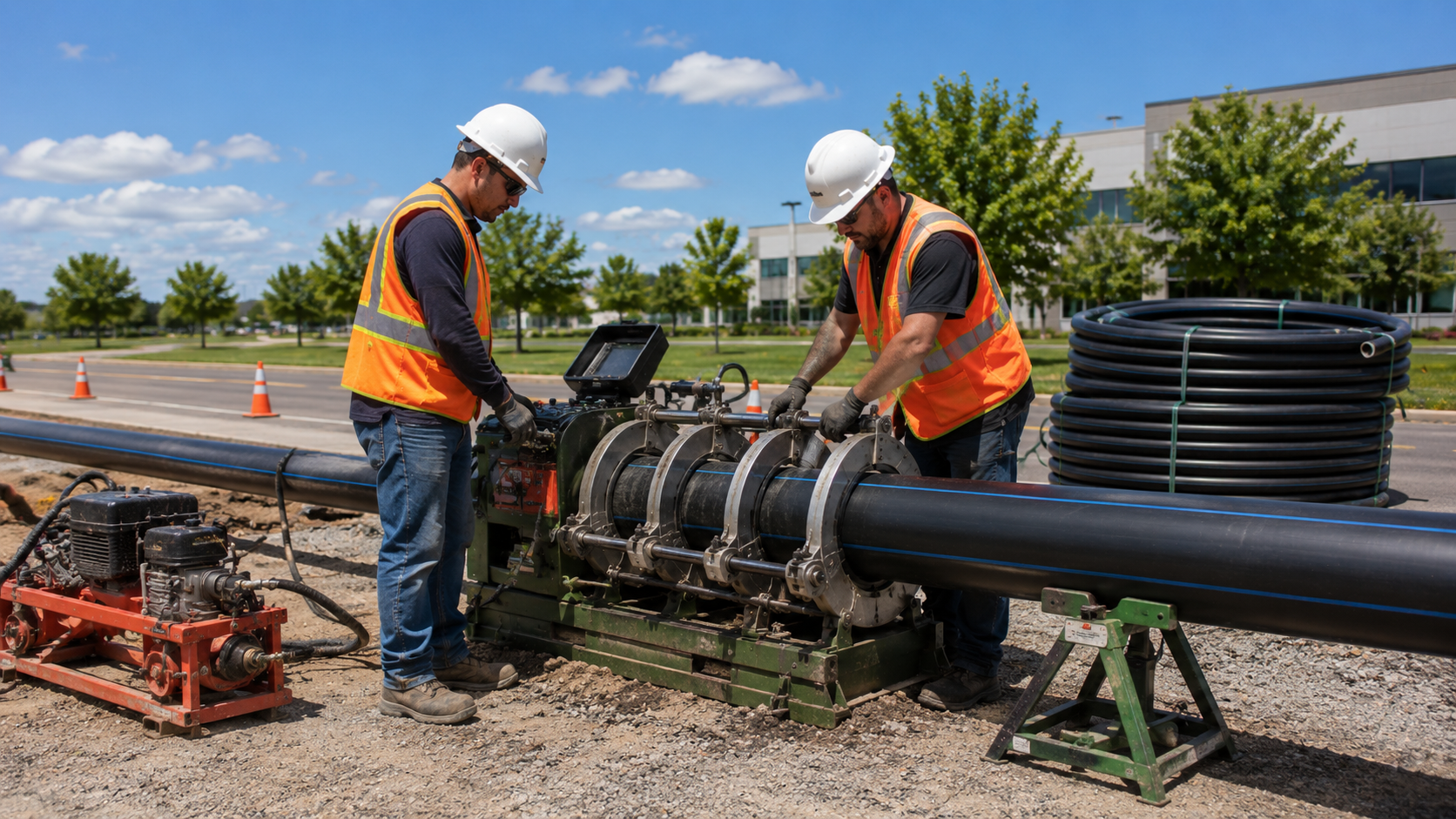
Pipe fusing is often used when conduit needs to be prepared before pulling through a drilled path or installed as part of a planned underground route. It can work alongside horizontal directional drilling, conduit installation, trenching, and utility route planning.
For underground projects, the quality of the conduit path matters. Clean fusion, route planning, access, depth, and utility coordination all affect whether the next trade can pull cable, fiber, wire, or utility service efficiently.
Bravo Bores supports HDPE pipe fusing for contractors, electricians, telecom crews, property managers, and project teams that need underground infrastructure prepared for the next phase of work.
Where HDPE fusing helps
Directional drilling, telecom, fiber, and utility conduit
HDPE pipe fusing can support telecom pathways, fiber conduit, electrical conduit, lighting routes, site utilities, irrigation control, commercial infrastructure, and future pull-ready underground paths. It is often part of a larger utility installation rather than a standalone decision.
Depending on the site, HDPE conduit may be fused before directional drilling, placed through an open trench, or prepared for a contractor-led utility route. The right approach depends on distance, surface conditions, access, and the service goal.
Bravo Bores helps connect the planning, conduit preparation, and installation method so the underground route is practical for the job.
Route planning matters
What to send before we estimate the work
For the best estimate, send the project address, start point, exit point, surface type, approximate route length, utility or conduit goal, and photos that show access or obstacles. Clear information helps us determine whether the project needs drilling, boring, trenching, conduit installation, locating, GPR, pipe fusing, handholes, or a combination of services.
Before underground work begins, required utility locates or GPR should be handled. Public utility marking is part of safe digging, and private lines may require additional locating. Florida excavators and property owners can learn more from Sunshine 811, the official Florida 811 resource for damage prevention and locate tickets.
How projects move
From route review to installation
Most projects start with a quote request, email, or call. Bravo Bores reviews the location, route, surface conditions, access, service goal, and photos if available. Once the estimate is approved, required locates or GPR are completed before underground work begins.
During installation, the route is drilled, bored, trenched, fused, located, or prepared for the next trade based on the service needed. The cleaner the route planning is at the beginning, the easier it is to reduce delays, avoid unnecessary restoration, and keep the underground work practical for the site.
HDPE Pipe Fusing FAQs
What is HDPE pipe fusing?
Is HDPE used with directional drilling?
What projects use HDPE conduit?
Southwest Florida
Need an underground utility route planned?
Send Bravo Bores the route, surface type, utility goal, and photos if available. We will review the project and recommend the right underground method.